
10/31/2026 • 1 min read
59 views
COPD in Winter: Why Breathing Problems Can Get Worse and How Patients Can Stay Safe
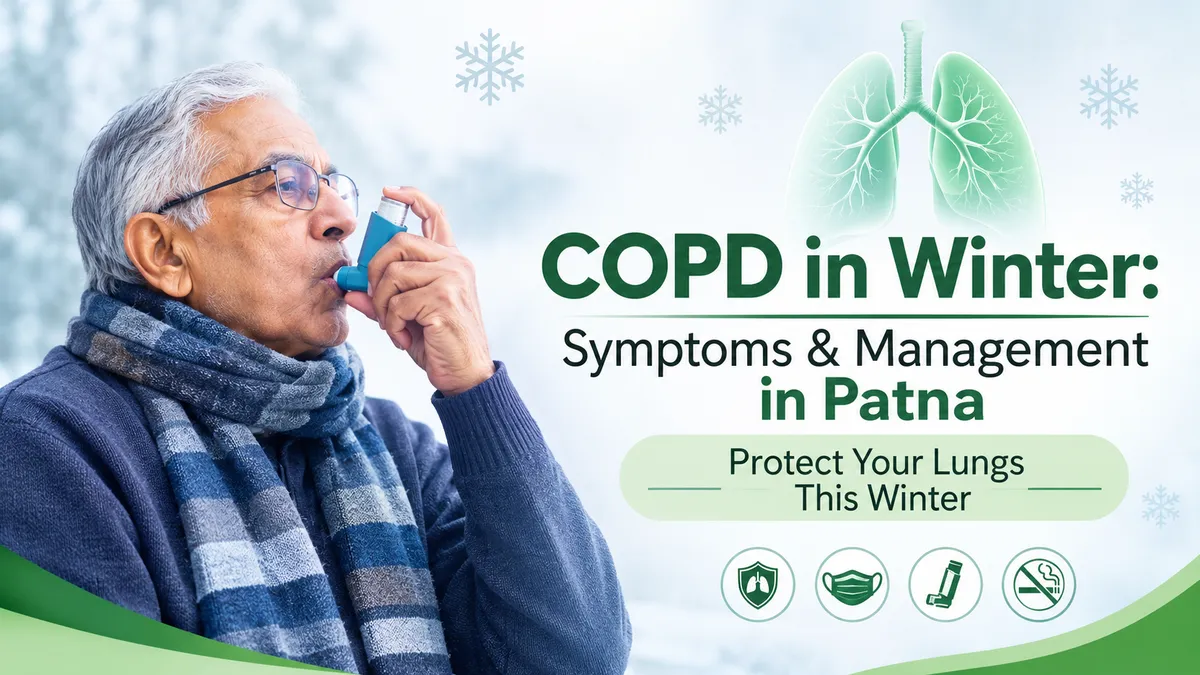
Winter can be a challenging season for people living with Chronic Obstructive Pulmonary Disease (COPD). As temperatures drop, cold air, respiratory infections, and increased air pollution can make breathing more difficult and increase the risk of a COPD exacerbation.
For patients who already experience coughing, mucus production, wheezing, or breathlessness, even a small change in their respiratory health can affect everyday activities.
In cities like Patna, winter also brings concerns about outdoor air pollution, dust, and changing weather conditions. These factors may add to the respiratory challenges faced by people with COPD.
Understanding why COPD symptoms can worsen during winter, recognising early warning signs, and following an appropriate COPD management plan can help patients reduce avoidable risks.
In this article, we explain how winter affects COPD, what patients can do to protect their lung health, and when to consult a pulmonologist.
What Is COPD?
Chronic Obstructive Pulmonary Disease (COPD) is a long-term lung condition that causes persistent airflow limitation, making it difficult to breathe.
COPD commonly includes two conditions:
- Chronic bronchitis: A condition involving long-term inflammation of the airways, often associated with persistent cough and mucus production.
- Emphysema: A condition in which the air sacs (alveoli) in the lungs become damaged, reducing the efficiency of airflow and gas exchange.
Common symptoms of COPD include:
- Persistent cough
- Regular mucus or phlegm production
- Breathlessness, particularly during physical activity
- Wheezing
- Chest tightness
- Frequent respiratory infections
COPD is commonly associated with tobacco smoking, but exposure to biomass fuel smoke, indoor air pollution, occupational dust, and other harmful airborne substances can also contribute to the development of the disease.
COPD requires long-term medical management. Although the condition is not usually reversible, appropriate treatment, lifestyle measures, and regular follow-up can help manage symptoms and reduce the risk of exacerbations.
Why Can COPD Symptoms Get Worse During Winter?
Winter does not affect every COPD patient in the same way. However, several seasonal factors may increase respiratory symptoms or trigger an exacerbation.
1. Cold Air Can Irritate the Airways
Breathing cold air may irritate sensitive airways and increase coughing, wheezing, or breathlessness in some people with COPD.
Cold and dry air can make breathing uncomfortable, particularly when patients move suddenly from a warm indoor environment to cold outdoor conditions.
For individuals with already limited airflow, this additional irritation can make routine activities more difficult.
2. Respiratory Infections Become an Important Concern
Respiratory infections caused by viruses and bacteria can trigger COPD exacerbations.
Common infections, including influenza and other viral respiratory infections, may lead to increased airway inflammation and mucus production.
Patients with COPD should pay attention to new symptoms such as:
- Increased coughing
- More mucus than usual
- A change in the colour or consistency of sputum
- Increased breathlessness
- Fever or other symptoms of infection
- Increased wheezing
Not every change indicates a bacterial infection. Medical assessment may be needed to identify the cause and determine appropriate treatment.
3. Winter Air Pollution Can Worsen Respiratory Symptoms
Air pollution is an important respiratory-health concern in Patna, particularly during periods of poor winter air quality.
Fine particulate matter (PM2.5), vehicle emissions, road dust, construction activities, and smoke from burning materials can affect respiratory health.
For COPD patients, exposure to polluted air may increase airway irritation, coughing, and breathing difficulties.
People living in Kankarbagh and other parts of Patna should pay attention to local Air Quality Index (AQI) readings, especially when planning outdoor activities.
4. Reduced Physical Activity Can Affect Lung Health
During colder months, some COPD patients spend more time indoors and become less physically active.
However, regular physical activity, within individual medical limits, plays an important role in maintaining muscle strength, mobility, and exercise tolerance.
Prolonged inactivity can contribute to reduced physical conditioning, making everyday activities such as walking, climbing stairs, or performing household tasks more difficult.
Patients should discuss suitable exercise and pulmonary rehabilitation options with their healthcare provider.
What Is a COPD Exacerbation?
A COPD exacerbation is an episode in which respiratory symptoms become worse than the patient's usual day-to-day condition.
It may develop over several hours or days and can require a change in medical treatment.
Common warning signs include:
- More breathlessness than usual
- Increased cough
- Increased mucus production
- A change in sputum colour
- Increased wheezing or chest tightness
- Reduced ability to perform routine activities
Respiratory infections and air pollution are among the possible triggers.
COPD exacerbations should not be ignored because severe episodes may require emergency assessment or hospital treatment.
If symptoms suddenly worsen, patients should follow their clinician-provided action plan and seek timely medical advice.
8 Ways to Manage COPD and Protect Your Lungs During Winter
Winter COPD management involves more than avoiding cold temperatures. It includes following prescribed treatment, reducing exposure to respiratory triggers, and recognising changes in symptoms early.
1. Continue Your Prescribed COPD Medication
Patients should continue taking their prescribed COPD medication according to their doctor's instructions.
Maintenance inhalers help control symptoms and may reduce the risk of exacerbations, depending on the prescribed treatment.
Do not stop inhalers because you feel better or change the dosage without medical advice.
If you are experiencing more frequent breathlessness or using your reliever medication more often than usual, consult your doctor.
2. Check Your Inhaler Technique
Using an inhaler incorrectly may prevent the medicine from reaching the lungs effectively.
Common inhaler-related mistakes include:
- Incorrect inhalation technique
- Not coordinating inhalation with pressing the inhaler when required
- Not using a prescribed spacer correctly
- Skipping doses
- Not following device-specific cleaning instructions
Ask your doctor, nurse, or trained healthcare professional to demonstrate the correct technique for your particular inhaler.
Different inhaler devices require different techniques, so instructions should be specific to the device prescribed.
3. Protect Yourself From Cold Air
Sudden exposure to cold air may trigger coughing or breathing discomfort in some COPD patients.
Practical precautions include:
- Covering your nose and mouth with a scarf when outdoors.
- Avoiding sudden transitions between very cold outdoor air and warm indoor environments where possible.
- Dressing appropriately for the weather.
- Avoiding strenuous outdoor activities when cold air triggers symptoms.
A scarf can help warm the air you breathe, but it does not filter fine air pollutants in the way a properly fitted particulate respirator can.
4. Reduce Exposure to Air Pollution
Poor air quality can aggravate COPD symptoms.
Patients should consider the following measures:
- Check the local AQI before going outdoors.
- Avoid prolonged outdoor exercise during periods of poor air quality.
- Stay away from heavily congested roads and dusty construction areas when possible.
- Avoid smoking and exposure to second-hand smoke.
- Avoid burning waste or other materials near the home.
- Reduce indoor smoke from incense, dhoop, and other combustion sources if these worsen symptoms.
- Consider an appropriately sized air purifier with effective particle filtration where practical.
People with COPD should follow local public-health advisories and seek individual medical advice about activity restrictions during severe pollution episodes.
5. Take Respiratory Infections Seriously
Respiratory infections can trigger serious COPD exacerbations.
Patients should:
- Wash their hands regularly.
- Avoid close contact with people who have respiratory infections when possible.
- Maintain appropriate respiratory hygiene.
- Discuss recommended vaccinations with their doctor.
- Seek medical advice if new respiratory symptoms develop or existing symptoms worsen.
Vaccination recommendations may include influenza and pneumococcal vaccines, depending on age, medical history, previous vaccination, and current national recommendations.
Vaccines should be discussed with a qualified healthcare professional rather than selected independently.
6. Maintain Suitable Physical Activity
Physical activity can help maintain muscle strength and improve the ability to perform daily activities.
Depending on the patient's condition, suitable activities may include:
- Gentle indoor walking
- Supervised exercise
- Prescribed breathing exercises
- Activities included in a pulmonary rehabilitation programme
Patients with severe breathlessness, low exercise tolerance, or unstable symptoms should seek medical guidance before starting or increasing exercise.
7. Follow a Balanced and Nutritious Diet
Good nutrition is an important part of long-term COPD management.
Patients should aim for a balanced diet that includes:
- Adequate protein from suitable food sources
- Vegetables and fruits
- Whole grains and other appropriate carbohydrate sources
- Healthy fats
- Sufficient fluids, unless fluid restriction has been advised
Nutritional requirements vary between individuals. Some COPD patients may experience weight loss and muscle wasting, while others may have excess body weight.
A personalised nutrition plan may be helpful when dietary or weight-related concerns affect respiratory health.
8. Keep Regular Follow-Up Appointments
COPD is a chronic condition that requires ongoing assessment.
Regular follow-up allows a healthcare professional to review:
- Changes in breathlessness and cough
- Frequency of exacerbations
- Inhaler technique and medication use
- Exercise tolerance
- Nutritional status
- Other health conditions that may affect breathing
The need for lung function testing, imaging, oxygen assessment, or other investigations depends on the patient's clinical condition.
When Should a COPD Patient See a Pulmonologist?
Patients with COPD should not wait until breathing difficulties become severe before seeking medical advice.
Consult a pulmonologist if you notice:
- Increasing breathlessness during routine activities
- More frequent coughing or wheezing
- Increased mucus production or a change in sputum
- Repeated chest infections
- Reduced ability to walk or perform daily activities
- Symptoms that are not improving with the prescribed treatment
- More frequent COPD exacerbations
A pulmonologist can assess the patient's respiratory condition, review existing treatment, and recommend further evaluation when necessary.
When Is Emergency Medical Attention Necessary?
Seek immediate medical attention if you experience:
- Severe or rapidly worsening breathlessness
- Difficulty speaking because of breathlessness
- Blue or grey lips or fingertips
- Confusion, unusual drowsiness, or fainting
- Severe or persistent chest pain
- Breathing difficulty that does not improve with the prescribed emergency treatment plan
Do not delay emergency care while trying home remedies or changing medication independently.
How Is COPD Evaluated and Managed?
COPD management depends on the patient's symptoms, lung function, history of exacerbations, other medical conditions, and individual treatment needs.
A clinical evaluation may include:
Medical History and Physical Examination
The doctor may ask about smoking history, exposure to dust or smoke, cough, mucus production, breathlessness, previous respiratory infections, and existing medications.
Spirometry
Spirometry is an important lung function test used to confirm COPD in an appropriate clinical setting.
It measures how much air a person can breathe out and how quickly they can exhale.
Assessment of Oxygen Levels
Pulse oximetry may be used to measure blood oxygen saturation. Additional tests, such as arterial blood gas analysis, may be required in selected patients.
Individualised Treatment
Depending on the patient's condition, COPD management may involve:
- Prescribed bronchodilator inhalers
- Other inhaled medications when clinically indicated
- Smoking cessation support
- Vaccination according to recommendations
- Pulmonary rehabilitation
- Nutritional support
- Oxygen therapy for patients who meet appropriate clinical criteria
Not every COPD patient requires the same treatment. Medication selection and treatment adjustments should be based on individual clinical assessment and current medical guidelines.
COPD Care at Madhukar's Clinic & Lung Hospital, Patna
People experiencing persistent cough, breathlessness, wheezing, or repeated respiratory infections may benefit from an appropriate evaluation by a respiratory specialist.
At Madhukar's Clinic & Lung Hospital, Kankarbagh, Patna, respiratory care includes evaluation and management of lung conditions such as COPD, asthma, and other respiratory disorders.
Dr. S. K. Madhukar (Dr. Sujeet Madhukar) is associated with the clinic as its Director and provides specialist care in pulmonary and respiratory medicine.
The clinic's respiratory-care services include:
- Pulmonary consultation
- Lung function assessment, including spirometry
- COPD and asthma evaluation
- Pulmonary rehabilitation
- Respiratory follow-up and treatment guidance
- Supporting diagnostic services
The appropriate investigations and treatment depend on each patient's medical history and clinical findings.
Patients in Patna, including those from Kankarbagh and nearby areas, can seek an appointment for respiratory evaluation when symptoms persist or worsen.
Clinic information
Madhukar's Clinic & Lung HospitalF-201, P C Colony Road, Kankarbagh, Patna, Bihar – 800020
Phone: +91 97718 52621
Website: https://madhukarlunghospital.com/
Appointments: Please contact the clinic to confirm appointment availability.
Frequently Asked Questions About COPD in Winter
1. Why do COPD symptoms get worse during winter?
Cold air, respiratory infections, and air pollution can irritate the airways and trigger COPD exacerbations in some patients. The effect varies depending on the severity of the disease and individual health.
2. Can cold weather cause a COPD exacerbation?
Cold weather may contribute to worsening respiratory symptoms, particularly when combined with respiratory infections or air pollution. It is important to recognise changes in breathlessness, cough, and mucus production.
3. Should COPD patients avoid going outside during winter?
Not necessarily. Physical activity remains important for people with COPD. However, patients should consider the temperature, air quality, their symptoms, and their doctor's advice before planning outdoor activities.
4. Which inhaler is best for COPD patients?
There is no single inhaler suitable for every COPD patient. The choice depends on symptoms, lung function, exacerbation history, other medical conditions, and treatment response. A pulmonologist can recommend an appropriate inhaler.
5. Can COPD patients use nebulisers instead of inhalers?
Nebulisers and inhalers are different methods of delivering medication. A nebuliser may be appropriate in selected situations, but it is not automatically better than an inhaler. The choice should be based on the patient's condition and ability to use the prescribed device.
6. Should COPD patients take the flu vaccine?
Influenza vaccination is recommended for many people with chronic respiratory conditions, including COPD, subject to individual eligibility and applicable vaccination guidance. Patients should discuss the appropriate vaccine and schedule with their doctor.
7. Does COPD get worse with age?
COPD is a progressive condition in many patients, but the rate of progression varies. Appropriate treatment, avoiding harmful exposures, and regular medical follow-up can help manage symptoms and reduce exacerbation risk.
8. When should a COPD patient consult a pulmonologist?
Consult a pulmonologist when breathlessness increases, cough or mucus production changes, respiratory infections recur, or prescribed treatment is not providing adequate symptom control. Severe breathing difficulty requires emergency medical attention.
Conclusion
Winter requires additional attention for people living with COPD. Cold air, respiratory infections, and air pollution can contribute to worsening symptoms and COPD exacerbations.
Following prescribed inhaler treatment, reducing exposure to pollutants, maintaining appropriate physical activity, discussing recommended vaccinations, and attending regular follow-up appointments are important parts of COPD management.
Most importantly, patients should recognise early warning signs and seek medical advice when their breathing becomes worse than usual.
For people in Patna experiencing persistent respiratory symptoms, a consultation with a qualified pulmonologist can help identify the cause and guide appropriate care.
Medical Disclaimer: This article is intended for general educational purposes only. It does not replace individual medical consultation, diagnosis, or treatment. COPD management must be personalised by a qualified healthcare professional. Patients should not change or discontinue prescribed medication without medical advice.
Author: Medical Editorial Team, Madhukar's Clinic & Lung Hospital
References
- Global Initiative for Chronic Obstructive Lung Disease (GOLD). 2026 Global Strategy for the Prevention, Diagnosis and Management of COPD. https://goldcopd.org/2026-gold-report-and-pocket-guide/
- Ministry of Health and Family Welfare, Government of India. Standard Treatment Guidelines – COPD. https://www.clinicalestablishments.mohfw.gov.in/sites/default/files/standard-treatment-guidelines/5821.pdf
- Indian Council of Medical Research (ICMR). Standard Treatment Workflows – Chronic Obstructive Pulmonary Disease. https://www.icmr.gov.in/standard-treatment-workflows-stws
- Singh S, et al. SWORD survey: Seasonal trends in hospitalisation and mortality among patients with respiratory illnesses in India. Lung India. 2026;43(5):496–506. https://doi.org/10.4103/lungindia.lungindia_812_25
Related Reads
Winter Air Pollution in Patna: How to Protect Your Lungs and When to See a Doctor
Winter air pollution can worsen coughing, wheezing, and breathing difficulties. Learn how to reduce exposure in Patna, protect your lung health, and recognise symptoms that need medical attention.
Chronic Cough: Causes, Diagnosis and Treatment by a Pulmonologist
A persistent cough can be caused by asthma, respiratory infections, allergies, acid reflux and other conditions. Learn about chronic cough symptoms, diagnosis, treatment options and when to consult a pulmonologist in Patna.
How to Choose a Pulmonologist in Patna: 10 Things Patients Should Consider
Looking for a pulmonologist in Patna? Learn 10 important factors to consider when choosing a qualified lung and respiratory specialist for diagnosis, treatment, and long-term care.
Why Book an Appointment with Dr. S. K. Madhukar, One of the Leading Pulmonologists in Patna?
Looking for the best pulmonologist in Patna or Kankarbagh? Discover why Dr. S. K. Madhukar is trusted for specialized lung, pulmonary, and respiratory care in Patna, Bihar.
H1N1 Influenza in 2026: Symptoms, Treatment, Prevention & When to See a Doctor
Learn about H1N1 influenza in 2026, including its symptoms, treatment, prevention, complications, and warning signs that require medical attention.
Need Respiratory Care?
Consult Dr. S. K. Madhukar at Madhukar's Clinic & Lung Hospital for expert pulmonology diagnosis & treatment.
Book Appointment