
7/31/2026 • 1 min read
51 views
Everything You Need to Know About Spirometry Test: Purpose, Procedure & Benefits
Breathing is something we rarely think about—until it becomes difficult. If you've been experiencing persistent cough, wheezing, shortness of breath, or chest tightness, your doctor may recommend a Spirometry Test.
Spirometry is one of the most accurate and commonly used lung function tests. It helps doctors measure how well your lungs work, detect respiratory diseases at an early stage, and monitor ongoing treatment.
At Madhukar's Clinic & Lung Hospital, Patna, we use advanced spirometry equipment to diagnose and manage various lung conditions, helping patients breathe easier and live healthier lives.
What is a Spirometry Test?
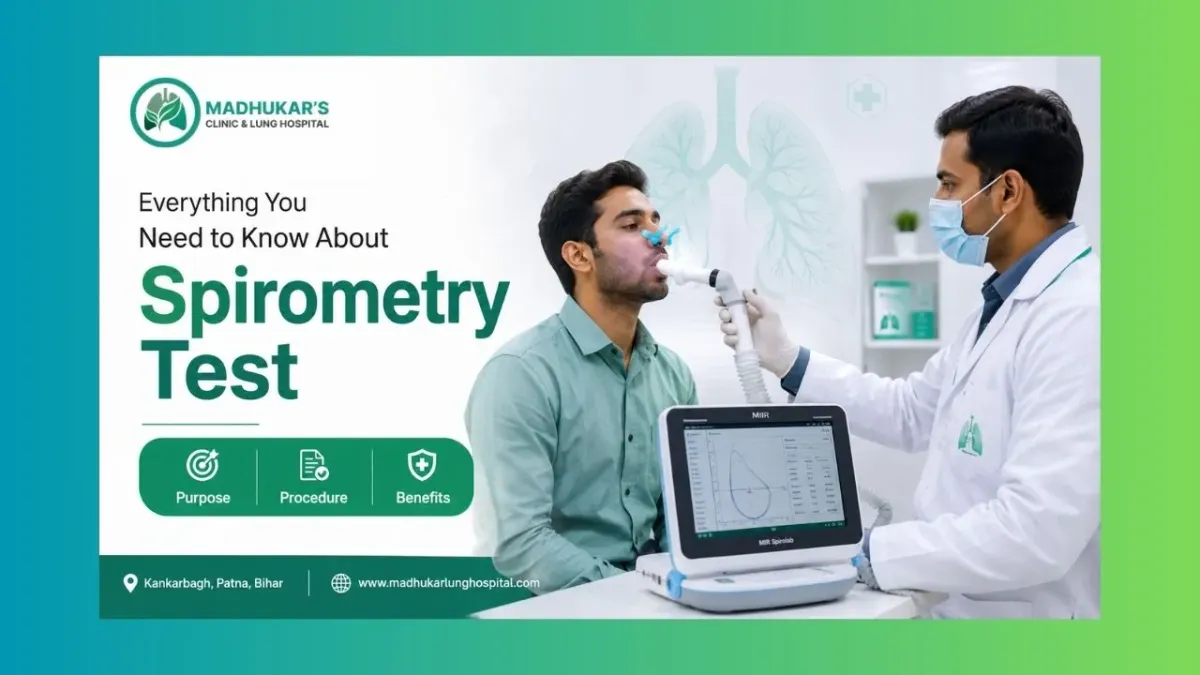
A Spirometry Test is a simple, painless, and non-invasive test that measures how much air you can inhale and exhale, and how quickly you can breathe out.
The test evaluates your lung function and helps identify whether your airways are narrowed, blocked, or functioning normally.
It is considered the gold standard for diagnosing several respiratory diseases.
Why is Spirometry Important?
Many lung diseases develop slowly and may not show obvious symptoms in the early stages.
Spirometry helps doctors:
- Detect lung diseases early
- Measure lung capacity
- Evaluate breathing difficulties
- Monitor disease progression
- Assess treatment effectiveness
- Determine the severity of lung disorders
- Prepare patients before surgery
- Evaluate occupational lung health
Early diagnosis often leads to better treatment outcomes and prevents long-term lung damage.
Who Should Get a Spirometry Test?
Your doctor may recommend spirometry if you have:
- Persistent cough lasting more than 3 weeks
- Frequent wheezing
- Shortness of breath
- Chest tightness
- Difficulty breathing during exercise
- Recurrent chest infections
- Long-term smoking history
- Exposure to dust, chemicals, or pollution
- Family history of lung diseases
It is also recommended for people already diagnosed with respiratory conditions to monitor their progress.
Diseases Diagnosed Using Spirometry
Spirometry plays a vital role in diagnosing and monitoring several respiratory disorders, including:
Asthma
Detects airway narrowing and helps assess the severity of asthma.
Chronic Obstructive Pulmonary Disease (COPD)
Measures airflow limitation caused by chronic bronchitis or emphysema.
Pulmonary Fibrosis
Evaluates reduced lung capacity due to lung scarring.
Bronchiectasis
Helps monitor chronic airway damage.
Occupational Lung Diseases
Useful for workers exposed to dust, smoke, or industrial chemicals.
How is the Spirometry Test Performed?
The procedure is quick and usually takes 10–20 minutes.
Step 1
A technician places a soft clip on your nose to ensure all breathing happens through your mouth.
Step 2
You place your mouth tightly around a sterile mouthpiece connected to the spirometer.
Step 3
Take the deepest breath possible.
Step 4
Blow out as hard and as fast as you can until your lungs feel completely empty.
Step 5
The test may be repeated several times to ensure accurate results.
Sometimes, the test is repeated after using a bronchodilator (inhaler) to check whether your breathing improves.
Is Spirometry Painful?
No.
Spirometry is:
- Completely painless
- Non-invasive
- Safe for most people
- No needles
- No injections
- No hospitalization
Some people may feel slightly dizzy for a few seconds after blowing forcefully, but this usually resolves quickly.
How Should You Prepare for a Spirometry Test?
For accurate results, follow these simple guidelines:
- Avoid smoking before the test.
- Avoid heavy meals immediately beforehand.
- Wear loose, comfortable clothing.
- Avoid strenuous exercise before testing.
- Inform your doctor about any inhalers or medications you're taking.
- Follow your doctor's instructions regarding medication use before the test.
Understanding Spirometry Results
Your doctor analyzes several measurements from the test, including:
FVC (Forced Vital Capacity)
The total amount of air you can forcefully exhale after taking a deep breath.
FEV1 (Forced Expiratory Volume in One Second)
The amount of air you can exhale in the first second of forced breathing.
FEV1/FVC Ratio
This helps determine whether there is airflow obstruction.
Based on these values, your doctor can identify whether your lungs are functioning normally or if there are signs of obstructive or restrictive lung disease.
Benefits of Spirometry
Spirometry offers several advantages:
- Early detection of lung diseases
- Accurate diagnosis
- Monitors treatment response
- Tracks disease progression
- Helps doctors adjust medications
- Reduces complications through early intervention
- Improves long-term lung health
Common Symptoms That Should Never Be Ignored
Consider getting evaluated if you experience:
- Breathlessness while walking
- Wheezing
- Chest tightness
- Persistent cough
- Frequent respiratory infections
- Reduced exercise capacity
- Chronic smoker's cough
Early testing can make a significant difference in preventing serious lung disease.
Is Spirometry Safe?
Yes.
Spirometry is considered one of the safest diagnostic tests for lung function.
However, it may be postponed if you have recently experienced:
- Heart attack
- Eye surgery
- Chest surgery
- Abdominal surgery
- Severe chest pain
- Active respiratory infection
Your doctor will decide whether the test is appropriate based on your medical condition.
Why Choose Madhukar's Clinic & Lung Hospital for Spirometry?
At Madhukar's Clinic & Lung Hospital, Patna, we provide:
- Advanced digital spirometry testing
- Experienced pulmonologists
- Accurate and reliable reporting
- Personalized treatment plans
- Comprehensive lung care under one roof
- Patient-friendly environment
- Evidence-based respiratory care
Our goal is not only to diagnose lung diseases but also to help patients breathe better and enjoy a healthier life.
Frequently Asked Questions (FAQs)
How long does a Spirometry Test take?
Usually 10 to 20 minutes, including repeated attempts for accuracy.
Do I need to fast before the test?
No. However, avoid eating a heavy meal immediately before the test.
Can children undergo spirometry?
Yes. Children above the appropriate age who can follow breathing instructions may undergo the test.
Is spirometry enough to diagnose asthma?
Spirometry is one of the most important diagnostic tools for asthma, but your doctor may recommend additional tests depending on your symptoms.
Can smokers benefit from spirometry?
Absolutely. Smokers are at higher risk of COPD and other lung diseases, making regular lung function testing especially valuable.
Conclusion
A Spirometry Test is a simple yet powerful tool that helps detect lung diseases before they become severe. Whether you're experiencing breathing difficulties or simply want to assess your lung health, early testing can lead to timely treatment and better outcomes.
If you have persistent cough, breathlessness, wheezing, or a history of smoking, don't ignore the signs.
Book your Spirometry Test at Madhukar's Clinic & Lung Hospital, Patna, and take the first step toward healthier lungs.
Related Reads
H1N1 Influenza in 2026: Symptoms, Treatment, Prevention & When to See a Doctor
Learn about H1N1 influenza in 2026, including its symptoms, treatment, prevention, complications, and warning signs that require medical attention.
Sleep Apnea: Symptoms, Causes, Diagnosis & Treatment
Learn about sleep apnea symptoms, causes, diagnosis and treatment. Know when to get a sleep study and when to consult a pulmonologist in Patna.
Madhukar's Clinic & Lung Hospital: Best Pulmonology Hospital in Patna, Bihar
Looking for the best pulmonology hospital in Patna, Bihar? Discover why Madhukar's Clinic & Lung Hospital is trusted for expert diagnosis and treatment of asthma, COPD, pneumonia, tuberculosis, chronic cough, sleep disorders, and other respiratory diseases with advanced, patient-focused lung care.
How Can I Improve My Lung Health Naturally? 12 Doctor-Recommended Tips
Healthy lungs are essential for a healthy life. Discover 12 simple, science-backed ways to improve your lung health naturally through diet, exercise, breathing techniques, and healthy lifestyle habits. Learn when it's time to consult a lung specialist.
When Should You Visit a Pulmonologist? 10 Warning Signs You Shouldn't Ignore
Persistent cough, breathlessness, wheezing, or frequent chest infections may be signs of an underlying lung condition. Learn when it's time to consult a pulmonologist and why early diagnosis can protect your lung health.
Need Respiratory Care?
Consult Dr. S. K. Madhukar at Madhukar's Clinic & Lung Hospital for expert pulmonology diagnosis & treatment.
Book AppointmentArticles to Read
Cookie Policy
Lorem ipsum dolor sit amet, consectetur adipisicing elit. Dignissimos vel incidunt repellendus ex quibusdam quidem veniam corporis sequi, deserunt facere, esse veritatis aperiam eos odio perferendis qui at nisi consequatur.