
8/17/2026 • 1 min read
38 views
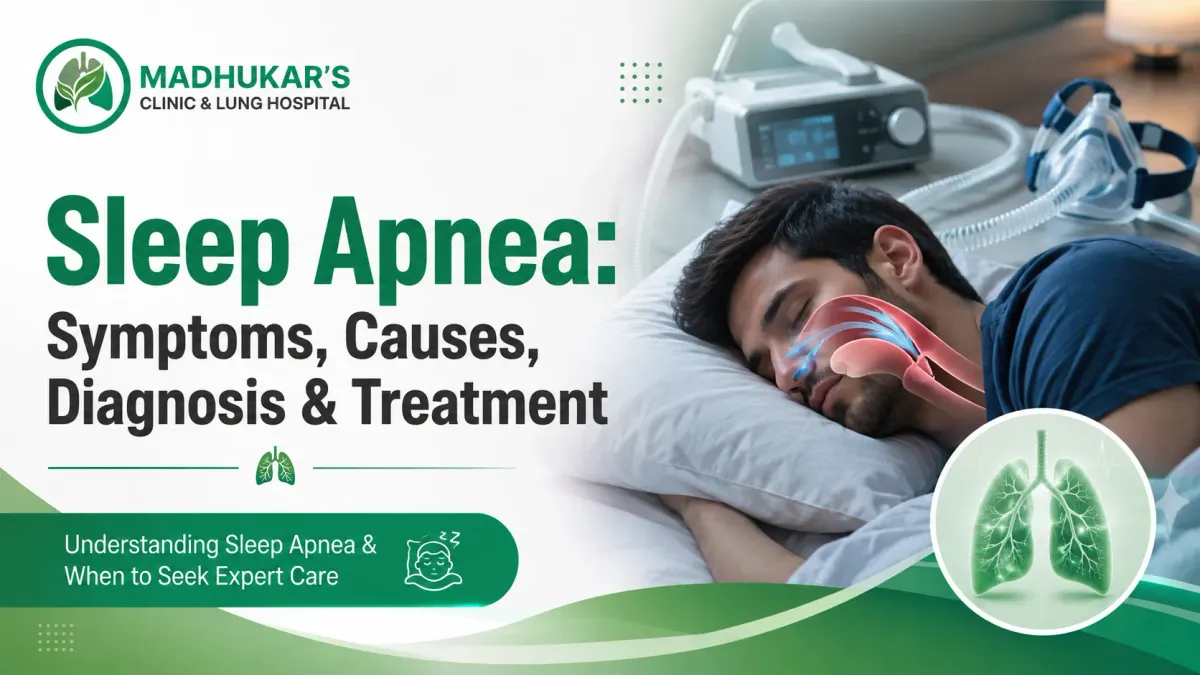
Sleep Apnea: Symptoms, Causes, Diagnosis & Treatment
Sleep Apnea: Symptoms, Causes, Diagnosis & Treatment
Do you snore loudly at night, wake up gasping for air, or feel tired even after getting enough sleep?
These may not simply be signs of poor sleep. They can be symptoms of sleep apnea, a common sleep-related breathing disorder in which breathing repeatedly stops and starts during sleep.
Sleep apnea can affect sleep quality, daytime energy, concentration, and overall health. If symptoms are persistent, proper evaluation by a pulmonologist or sleep specialist can help identify the underlying problem and determine whether a sleep study is required.
At Madhukar’s Clinic & Lung Hospital, Patna, patients with sleep-related breathing problems can receive specialist evaluation and guidance for appropriate diagnosis and treatment.
What Is Sleep Apnea?
Sleep apnea is a condition in which breathing repeatedly stops and starts while a person is asleep. These interruptions can reduce airflow and, in some cases, lower oxygen levels in the body.
There are two major types of sleep apnea:
Obstructive Sleep Apnea
Obstructive Sleep Apnea (OSA) is the most common type. It occurs when the upper airway becomes narrowed or blocked during sleep, restricting normal airflow.
Relaxation of the throat muscles, tongue position, body weight, airway anatomy, and other factors can contribute to airway obstruction.
Central Sleep Apnea
Central Sleep Apnea (CSA) occurs when the brain temporarily fails to send the appropriate signals that control breathing during sleep. It can be associated with certain medical conditions, medications, and other factors.
Because the causes can differ, diagnosis and treatment should be individualized.
What Are the Symptoms of Sleep Apnea?
Sleep apnea can produce symptoms during the night as well as during the daytime.
Common symptoms include:
- Loud or frequent snoring
- Breathing pauses during sleep
- Waking up suddenly while gasping or choking
- Excessive daytime sleepiness
- Feeling tired despite adequate sleep
- Morning headaches
- Dry mouth after waking
- Difficulty concentrating
- Poor memory or reduced alertness
- Frequent waking during the night
- Waking frequently to urinate
- Irritability or mood changes
Some symptoms may not be noticed by the person experiencing them. A partner or family member may be the first to notice loud snoring, breathing pauses, or gasping during sleep.
Is Snoring Always Sleep Apnea?
No.
Snoring can occur without sleep apnea. However, loud snoring accompanied by breathing pauses, gasping, choking, or excessive daytime sleepiness should not be ignored.
If someone regularly notices these symptoms, it is worth discussing them with a healthcare professional.
What Causes Sleep Apnea?
The causes depend on the type of sleep apnea.
In obstructive sleep apnea, the upper airway can become narrowed or blocked when the muscles of the throat relax during sleep.
Several factors can increase the risk, including:
- Excess body weight
- Increasing age
- Family history
- Certain airway or facial structures
- Enlarged tonsils
- Smoking
- Alcohol consumption
- Certain medical conditions
However, sleep apnea can occur even in people who are not overweight.
Central sleep apnea can have different causes and may be associated with conditions affecting the brain's control of breathing, certain heart conditions, stroke, or the use of opioid medicines.
Who Is at Higher Risk of Sleep Apnea?
You may have a higher risk of obstructive sleep apnea if you:
- Are overweight or have obesity
- Have a family history of sleep apnea
- Have high blood pressure
- Smoke
- Consume alcohol regularly
- Have certain anatomical features that narrow the airway
- Are older
- Have certain heart or neurological conditions
Having one or more risk factors does not necessarily mean you have sleep apnea. A proper medical evaluation is needed.
Why Should Sleep Apnea Be Taken Seriously?
Sleep apnea is not simply a problem of snoring.
Repeated interruptions in breathing can disturb normal sleep and may contribute to daytime tiredness, difficulty concentrating, and reduced alertness.
Untreated sleep apnea has also been associated with health problems such as high blood pressure, heart disease, stroke, and other cardiovascular complications.
This is why persistent symptoms should not be dismissed as normal tiredness or poor sleep.
How Is Sleep Apnea Diagnosed?
The diagnosis usually begins with a detailed medical and sleep history.
Your doctor may ask about:
- Snoring
- Sleep quality
- Daytime sleepiness
- Breathing pauses noticed by a family member
- Nighttime awakenings
- Existing medical conditions
- Medicines
- Weight and lifestyle factors
If sleep apnea is suspected, your doctor may recommend a sleep study.
What Is a Sleep Study?
A sleep study, also known as polysomnography, monitors different body functions while you sleep. Depending on the test, this can include breathing patterns, oxygen levels, heart activity, and other measurements.
For some adults with suspected obstructive sleep apnea, a home sleep apnea test may be appropriate. However, it is not suitable for every patient, and some people may require an overnight sleep study in a sleep laboratory.
Your doctor can determine which type of sleep testing is appropriate based on your symptoms and medical history.
What Is the Treatment for Sleep Apnea?
Treatment depends on the type and severity of sleep apnea and the patient's individual health needs.
1. Lifestyle Changes
Lifestyle changes may be recommended as part of sleep apnea management.
These can include:
- Maintaining a healthy weight
- Regular physical activity
- Following healthy sleep habits
- Avoiding smoking
- Limiting alcohol
- Sleeping on your side when advised by your doctor
Lifestyle changes can be particularly useful as part of a broader treatment plan for obstructive sleep apnea.
2. CPAP Therapy
CPAP, or Continuous Positive Airway Pressure, is one of the most commonly used treatments for obstructive sleep apnea.
A CPAP machine delivers continuous air pressure through a mask to help keep the airway open during sleep.
Other forms of positive airway pressure, including APAP and BPAP, may be recommended for selected patients depending on their condition.
The appropriate device and pressure settings should be determined by a qualified healthcare professional.
3. Oral Appliances
Some patients may benefit from specially designed oral appliances that help prevent the airway from becoming blocked during sleep.
These devices are not appropriate for everyone, so evaluation by a healthcare professional is important before starting treatment.
4. Other Treatment Options
Depending on the cause and severity of sleep apnea, some patients may require additional treatment approaches.
These can include specialized procedures or surgery in selected cases.
Treatment for central sleep apnea may be different from treatment for obstructive sleep apnea and should be based on the underlying cause and clinical evaluation.
Can Sleep Apnea Be Treated Without CPAP?
Not every patient with sleep apnea requires the same treatment.
Depending on the condition, a doctor may recommend lifestyle changes, positional therapy, oral appliances, positive airway pressure therapy, or other treatments.
The important point is to identify the type and severity of sleep apnea before choosing a treatment.
If you are experiencing symptoms, do not start or stop a treatment device without discussing it with your doctor.
When Should You See a Pulmonologist?
Consider consulting a pulmonologist or sleep specialist if you experience:
- Loud, persistent snoring
- Breathing pauses during sleep
- Nighttime choking or gasping
- Excessive daytime sleepiness
- Persistent morning headaches
- Poor concentration during the day
- Unexplained daytime fatigue
- Repeated nighttime awakenings
- Poor-quality sleep despite adequate sleeping hours
You should also seek medical evaluation if your partner or family member repeatedly notices that you stop breathing while sleeping.
Sleep Apnea in Patna: When Should You Get a Sleep Study?
If you live in Patna and regularly experience loud snoring, daytime sleepiness, nighttime gasping, or witnessed breathing pauses, a consultation with a pulmonologist can help determine whether further testing is needed.
A sleep study in Patna can help doctors assess breathing patterns during sleep and determine whether sleep apnea is present.
The results can also help guide the appropriate treatment plan.
At Madhukar’s Clinic & Lung Hospital, Patna, patients can consult a pulmonary medicine specialist for evaluation of sleep-related breathing concerns.
How Can You Reduce the Risk of Sleep Apnea?
Not every case of sleep apnea can be prevented. Factors such as age, genetics, anatomy, and certain medical conditions may play a role.
However, healthy lifestyle habits may help reduce the risk of obstructive sleep apnea.
These include:
- Maintaining a healthy weight
- Staying physically active
- Avoiding smoking
- Limiting alcohol
- Maintaining regular sleep habits
- Following your doctor's recommendations
Frequently Asked Questions About Sleep Apnea
What are the first warning signs of sleep apnea?
Loud snoring, breathing pauses during sleep, nighttime gasping, and excessive daytime sleepiness are common warning signs.
Can a person have sleep apnea without snoring?
Yes. Snoring is common, particularly with obstructive sleep apnea, but not everyone with sleep apnea snores loudly.
Can thin people have sleep apnea?
Yes. Although excess body weight is an important risk factor, sleep apnea can occur in people of different body types.
Is sleep apnea dangerous?
Untreated sleep apnea can affect sleep quality and daytime functioning and is associated with several important health problems, including cardiovascular complications.
What test confirms sleep apnea?
A sleep study is commonly used to diagnose sleep apnea. Depending on the patient, this may involve an overnight polysomnography or, in appropriate cases, a home sleep apnea test.
Is CPAP the only treatment for sleep apnea?
No. Treatment depends on the type and severity of sleep apnea. Options can include lifestyle changes, PAP therapy, oral appliances, and other treatments when appropriate.
Should I see a pulmonologist for sleep apnea?
Yes. A pulmonologist or sleep specialist can assess your symptoms, determine whether a sleep study is needed, and help guide appropriate treatment.
Final Takeaway
Sleep apnea is more than just snoring.
If your breathing repeatedly stops during sleep, or you regularly wake up gasping, feel excessively sleepy during the day, or wake up tired despite getting enough sleep, it is important to get evaluated.
Early recognition and appropriate treatment can improve sleep quality and help reduce the health risks associated with untreated sleep apnea.
If you are experiencing symptoms of sleep apnea, consult a pulmonologist for proper evaluation and discuss whether a sleep study is appropriate for you.
About Madhukar’s Clinic & Lung Hospital
Madhukar’s Clinic & Lung Hospital, Patna provides specialized care for respiratory and lung-related conditions. Patients experiencing persistent breathing problems, sleep-related breathing symptoms, chronic cough, wheezing, or unexplained breathlessness can consult a pulmonary medicine specialist for appropriate evaluation.
Related Reads
H1N1 Influenza in 2026: Symptoms, Treatment, Prevention & When to See a Doctor
Learn about H1N1 influenza in 2026, including its symptoms, treatment, prevention, complications, and warning signs that require medical attention.
Everything You Need to Know About Spirometry Test: Purpose, Procedure & Benefits
Discover what a Spirometry Test is, how it works, who should get tested, and why it's essential for diagnosing asthma, COPD, and other lung diseases. Learn how this quick, painless test helps assess your lung health and supports early treatment.
Madhukar's Clinic & Lung Hospital: Best Pulmonology Hospital in Patna, Bihar
Looking for the best pulmonology hospital in Patna, Bihar? Discover why Madhukar's Clinic & Lung Hospital is trusted for expert diagnosis and treatment of asthma, COPD, pneumonia, tuberculosis, chronic cough, sleep disorders, and other respiratory diseases with advanced, patient-focused lung care.
How Can I Improve My Lung Health Naturally? 12 Doctor-Recommended Tips
Healthy lungs are essential for a healthy life. Discover 12 simple, science-backed ways to improve your lung health naturally through diet, exercise, breathing techniques, and healthy lifestyle habits. Learn when it's time to consult a lung specialist.
When Should You Visit a Pulmonologist? 10 Warning Signs You Shouldn't Ignore
Persistent cough, breathlessness, wheezing, or frequent chest infections may be signs of an underlying lung condition. Learn when it's time to consult a pulmonologist and why early diagnosis can protect your lung health.
Need Respiratory Care?
Consult Dr. S. K. Madhukar at Madhukar's Clinic & Lung Hospital for expert pulmonology diagnosis & treatment.
Book AppointmentArticles to Read
Cookie Policy
Lorem ipsum dolor sit amet, consectetur adipisicing elit. Dignissimos vel incidunt repellendus ex quibusdam quidem veniam corporis sequi, deserunt facere, esse veritatis aperiam eos odio perferendis qui at nisi consequatur.